Introduction: The Economics of Rideshare in 2026
Choosing the right vehicle for Uber and Lyft in 2026 is no longer a simple preference; it is a critical business decision. With American gasoline prices averaging $4.15 to $4.60 per gallon and the rising costs of commercial vehicle insurance, a driver’s profit margin is directly tied to their car’s efficiency and maintenance profile.
Passengers in 2026 are also more demanding, often opting for premium tiers like Uber Comfort or Uber Green. To succeed, a driver must balance initial purchase price, fuel economy (MPG), insurance premiums, and passenger legroom. This guide provides an expert-level analysis of the top vehicles available in the US market, designed to maximize your long-term earnings and minimize operational headaches.
Comparison Table: Best Cars for Uber and Lyft Drivers in USA
| Model | Price Range | MPG / Range | Maintenance | Uber Category | Best Use Case |
| Toyota Corolla | $16k – $23k | 35 MPG | Very Low | UberX | City Driving |
| Toyota Prius | $27k – $34k | 57 MPG | Low | Uber Green | Max Profit |
| Tesla Model 3 | $23k – $39k | 272-360 Mi | Very Low | Comfort Elec | High-end Tech |
| Toyota Sienna | $33k – $49k | 36 MPG | Moderate | Uber XL | Airport Van |
| Honda Accord Hyb | $24k – $31k | 46 MPG | Low | Comfort | Long Distance |
| Chevy Bolt EV | $15k – $22k | 259 Mi | Very Low | Uber Green | Budget EV |
| Kia Telluride | $31k – $46k | 23 MPG | Moderate | Uber XL | Luxury Groups |
| Hyundai Elantra | $17k – $24k | 35 MPG | Very Low | UberX | New Drivers |
| Honda Civic | $19k – $26k | 37 MPG | Low | UberX | Modern Tech |
| Hyundai Sonata Hyb | $22k – $29k | 50 MPG | Low | Comfort | Night Driving |
| Toyota RAV4 Hyb | $25k – $35k | 41 MPG | Low | Comfort | AWD Needs |
| Hyundai Kona Elec | $21k – $29k | 258 Mi | Low | Uber Green | City Crossover |
Vehicle Requirements for 2026
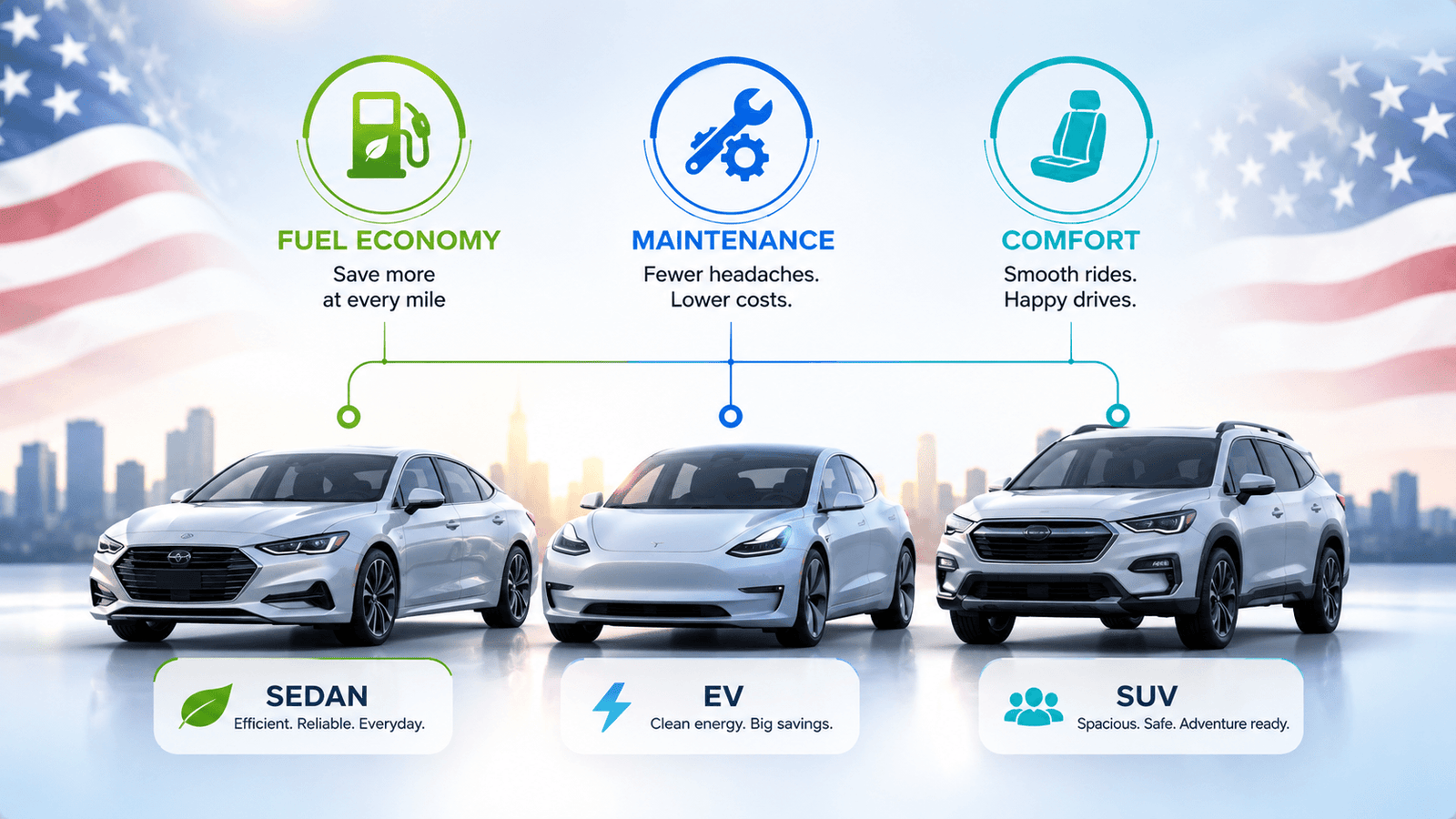
Before investing in a vehicle, you must ensure it meets the strict 2026 standards set by Uber and Lyft in the United States. While requirements can vary slightly by state (such as in California or Florida), the general baseline includes:
-
Model Year: For UberX, the vehicle must typically be 15 years old or newer. However, for Uber Comfort, the car must be 7 years old or newer.
-
Seating: Must have at least 4 doors and be able to transport a minimum of 4 passengers.
-
Title Status: Vehicles with salvaged, rebuilt, or reconstructed titles are strictly prohibited.
-
Safety: The car must pass a multi-point safety inspection focusing on brakes, tires, and lights.
To check the specific vehicle eligibility for your city, visit the official Uber Vehicle Requirements and Lyft Driver Help pages.
Top 12 Best Cars for Uber and Lyft Drivers in USA
Category A: The Fuel-Efficient Sedans
1. Toyota Corolla (2020–2025)
The Toyota Corolla remains the gold standard for budget-conscious rideshare drivers. Its reputation for bulletproof reliability means less time in the shop and more time on the road.
-
Pros: Exceptional reliability, high resale value, and standard Toyota Safety Sense.
-
Cons: Rear seat space is tight for larger passengers.
-
Price Range: $16,500 – $23,000 (Used).
-
Efficiency: 32–40 MPG.
-
Yearly Fuel Savings: Significant compared to older V6 models.
-
Maintenance Level: Very Low.
-
Best Use Case: UberX and City Driving.
This reliability makes it one of the best cars for Uber and Lyft drivers in USA who want to minimize repair costs.
The Toyota Corolla remains a top choice for rideshare drivers due to its legendary reliability and low maintenance costs.
2. Honda Civic (2021–2026)
The Honda Civic offers a more premium interior feel and better handling than most of its competitors.
-
Pros: Modern tech, high-quality cabin materials, and excellent fuel economy.
-
Cons: Slightly higher insurance costs than Toyota.
-
Price Range: $19,500 – $26,000.
-
Efficiency: 33–42 MPG.
-
Yearly Fuel Savings: High.
-
Maintenance Level: Low.
-
Best Use Case: UberX and Daily Commutes.
3. Hyundai Elantra (2022–2026)
The Elantra is a favorite for new drivers due to its aggressive pricing and the best warranty in the American market.
-
Pros: 10-year/100,000-mile powertrain warranty and modern infotainment.
-
Cons: Depreciation is faster than Japanese rivals.
-
Price Range: $17,000 – $24,500.
-
Efficiency: 33–37 MPG.
-
Yearly Fuel Savings: Moderate.
-
Maintenance Level: Very Low (due to warranty coverage).
-
Best Use Case: New Drivers looking for low risk.
Category B: The Hybrid Profit-Leaders
Choosing a hybrid is often the smartest move when looking for the best cars for Uber and Lyft drivers in USA due to the massive fuel savings.
4. Toyota Prius (2023–2026)
The 2026 Toyota Prius is the undisputed king of rideshare. The latest redesign added sleek styling to its legendary fuel economy.
-
Pros: Industry-leading 57 MPG and qualifies for Uber Green.
-
Cons: The sleek roofline makes it harder for tall passengers to enter the rear.
-
Price Range: $27,000 – $34,000.
-
Efficiency: 57 MPG.
-
Yearly Fuel Savings: $1,200+ vs. standard gas cars.
-
Maintenance Level: Low.
-
Best Use Case: Uber Green and Full-time Airport Runs.
5. Honda Accord Hybrid (2021–2025)
For drivers aiming for Uber Comfort, the Accord Hybrid is the perfect balance of luxury and efficiency.
-
Pros: Best-in-class rear legroom and a very quiet cabin.
-
Cons: Larger exterior makes it slightly harder to maneuver in tight urban alleys.
-
Price Range: $24,000 – $31,000.
-
Efficiency: 44–48 MPG.
-
Yearly Fuel Savings: $900+.
-
Maintenance Level: Low.
-
Best Use Case: Uber Comfort and Executive Rides.
6. Hyundai Sonata Hybrid (2022–2026)
The Sonata Hybrid provides a stylish alternative with high-end tech features often found in luxury cars.
-
Pros: Excellent warranty and very smooth regenerative braking.
-
Cons: Slightly less refined powertrain than Toyota’s hybrid system.
-
Price Range: $22,000 – $29,000.
-
Efficiency: 45–52 MPG.
-
Yearly Fuel Savings: $950+.
-
Maintenance Level: Low.
-
Best Use Case: Uber Comfort and Urban Driving.
Category C: The Electric Powerhouses (EVs)
7. Tesla Model 3 (2022–2026)
With massive price cuts in 2026, the Model 3 has become a powerhouse for professional drivers in tech-heavy US cities.
-
Pros: Access to the Supercharger network and qualifies for Uber Comfort Electric.
-
Cons: High insurance premiums and minimalist interior.
-
Price Range: $23,000 – $39,000.
-
Range: 272–360 miles.
-
Yearly Fuel Savings: $1,500+ (with home charging).
-
Maintenance Level: Very Low.
-
Best Use Case: Uber Comfort Electric and High-end Markets.
8. Chevrolet Bolt EV/EUV (2021–2023)
The Bolt EUV is a dedicated workhorse for drivers who want the lowest operating cost per mile.
-
Pros: Extremely affordable used prices and compact for city traffic.
-
Cons: Slow DC fast charging speeds.
-
Price Range: $15,000 – $22,000.
-
Range: 247–259 miles.
-
Yearly Fuel Savings: $1,450.
-
Maintenance Level: Very Low.
-
Best Use Case: UberX and Uber Green in Urban Centers.
9. Hyundai Kona Electric (2023–2026)
This crossover offers a higher seating position which many passengers prefer for visibility.
-
Pros: Great safety tech and a more traditional interior than Tesla.
-
Cons: Rear legroom is limited.
-
Price Range: $21,000 – $29,000.
-
Range: 258 miles.
-
Yearly Fuel Savings: $1,300.
-
Maintenance Level: Low.
-
Best Use Case: City Commutes and Small Families.
Category D: The High-Capacity SUVs (Uber XL)
10. Toyota RAV4 Hybrid (2022–2026)
The RAV4 Hybrid is the go-to for drivers in snowy US states who need All-Wheel Drive (AWD).
-
Pros: 41 MPG and excellent cargo space for luggage.
-
Cons: High demand leads to higher purchase prices.
-
Price Range: $25,000 – $35,000.
-
Efficiency: 41 MPG.
-
Yearly Fuel Savings: $850.
-
Maintenance Level: Low.
-
Best Use Case: UberX, Comfort, and AWD needs.
11. Toyota Sienna Hybrid (2021–2026)
Since every Sienna is now a hybrid, it is the most profitable vehicle for Uber XL drivers.
-
Pros: Fits up to 8 passengers and gets 36 MPG.
-
Cons: Large size makes it difficult to park.
-
Price Range: $33,000 – $49,000.
-
Efficiency: 36 MPG.
-
Yearly Fuel Savings: $2,100+ compared to gas minivans.
-
Maintenance Level: Moderate.
-
Best Use Case: Uber XL and Airport Van services.
12. Kia Telluride (2022–2026)
The Telluride is for the driver who wants to provide a premium experience for XL groups.
-
Pros: Award-winning luxury interior and massive passenger space.
-
Cons: Low fuel efficiency as it is a non-hybrid V6.
-
Price Range: $31,000 – $46,000.
-
Efficiency: 20–26 MPG.
-
Yearly Fuel Savings: Low.
-
Maintenance Level: Moderate.
-
Best Use Case: Uber XL and Luxury Group Transport.
The Driver’s Comfort and Safety Checklist
In 2026, passenger ratings are more critical than ever. A driver with a rating below 4.85 risks being deactivated in high-demand markets like Los Angeles or Chicago. To ensure you maintain a 5-star rating, evaluate these interior features before purchasing:
-
Rear Climate Controls: Passengers in the back seat often feel warmer or colder than the driver. Cars like the Toyota Sienna and Kia Telluride offer dedicated rear climate zones, which is a massive bonus for Uber Comfort and XL.
-
USB Ports and Charging: Ensure the vehicle has at least two USB-C ports in the rear. In 2026, every passenger expects to charge their smartphone during a 20-minute ride.
-
Legroom Metrics: Aim for a vehicle with at least 37 inches of rear legroom. The Honda Accord Hybrid leads this category, making it the preferred choice for business travelers.
-
Trunk Accessibility: If you plan on doing airport runs at JFK, LAX, or O’Hare, your trunk must accommodate at least two large suitcases and two carry-ons. Hatchbacks like the Toyota Prius and SUVs like the RAV4 Hybrid excel here.
2026 Rideshare Driver Safety Technology
Safety tech doesn’t just protect you; it lowers your insurance premiums. When choosing your rideshare vehicle, prioritize these Advanced Driver Assistance Systems (ADAS):
-
Blind Spot Monitoring: Essential for lane changes in heavy city traffic where cyclists and scooters are common.
-
Rear Cross-Traffic Alert: Crucial for backing out of tight driveways or busy street parking after dropping off a passenger.
-
Automatic Emergency Braking (AEB): Many insurance companies in the USA offer a discount if your vehicle is equipped with AEB, as it significantly reduces rear-end collisions.
-
Lane Keep Assist: Helpful for full-time drivers who spend 8+ hours on the highway and may experience driving fatigue.
Understanding Uber and Lyft Tiers in 2026
To maximize your income, you must understand which car qualifies for which tier. Each tier has a different pay scale:
-
UberX / Lyft Basic: The standard tier. Most 4-door sedans qualify. This has the highest volume of riders but the lowest pay per mile.
-
Uber Green: Specifically for Hybrids and EVs. Drivers often receive a $0.50 to $1.00 incentive per trip in many US cities.
-
Uber Comfort: Requires a vehicle with more legroom and a newer model year (2019+). You can earn 15-20% more per trip than UberX.
-
Uber XL: Requires 7-passenger seating. This is the most profitable tier for airport runs and weekend group outings, often paying double the rate of UberX.
-
Uber Comfort Electric: Reserved for high-end EVs like the Tesla Model 3 and Hyundai Ioniq 6. This is the highest-earning tier for non-luxury sedan drivers.
State-Specific Considerations for 2026
If you are driving in specific regions, your vehicle choice may change:
-
California & Washington: These states have aggressive “Clean Miles Standard” goals. Drivers in these areas should prioritize EVs or Plug-in Hybrids (PHEVs) to avoid future restrictions and access better incentives.
-
The Snow Belt (Michigan, Ohio, New York): All-Wheel Drive (AWD) is almost mandatory. Vehicles like the Toyota RAV4 Hybrid AWD or the Tesla Model 3 AWD are highly recommended to keep working during winter storms.
-
Florida & Texas: High-efficiency Air Conditioning systems are a priority. Toyota and Honda systems are historically more durable in extreme heat compared to some European luxury brands.
The Future of Rideshare: Resale Value and Exit Strategy
Every rideshare car is a depreciating asset. To minimize your losses, consider the “Exit Strategy” after 3 years or 150,000 miles:
-
High Resale Brands: Toyota and Honda vehicles typically retain 50-60% of their value even with high mileage.
-
EV Depreciation: Be aware that as battery technology improves, older EVs may lose value faster. However, their lower operating costs usually offset this loss.
-
Market Demand: White, Silver, and Black cars are the easiest to sell in the used market. Avoid “loud” colors like bright green or orange if you plan on selling the car within 36 months.
Hybrid vs. Gas vs. Electric for Uber Drivers
Choosing between these three powertrains is a financial trade-off.
-
Gasoline Vehicles: Have the lowest initial purchase price but the highest operating cost. In 2026, a driver using a non-hybrid sedan may spend $180 per week on fuel.
-
Hybrid Vehicles: Are the “sweet spot” for most drivers. They cost slightly more to buy but cut fuel bills by nearly 50% without requiring any downtime for charging.
-
Electric Vehicles (EVs): Offer the lowest per-mile cost if charged at home. However, public charging can be expensive and time-consuming. Maintenance is nearly non-existent for EVs, which saves long-term costs.
Step-by-Step Buying Guide for Uber Drivers
-
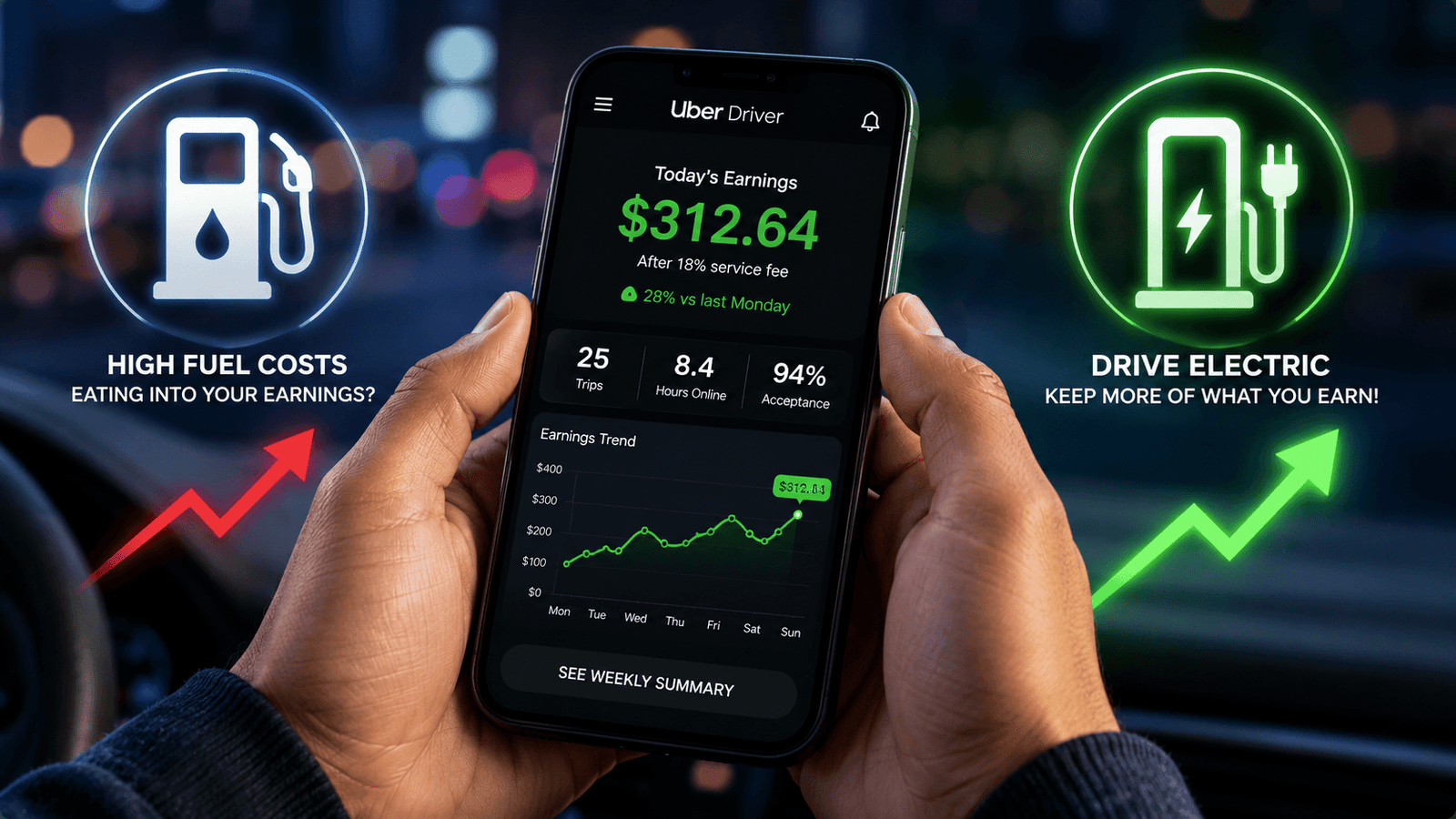
Analyze Your Daily Mileage: If you drive 200+ miles a day, a hybrid or EV is mandatory for profit.
-
Apply for Loan Pre-Approval: Secure your financing before entering the dealership. Use the 20/4/10 rule to ensure your payments don’t exceed 10% of your gross income.A key part of your budget planning should be comparing fuel costs, maintenance, and resale value before choosing a rideshare vehicle. to see which one offers the best resale value.
-
Verify Rideshare Insurance Rates: Call your provider to ensure they offer a “rideshare endorsement.”
-
Conduct a Passenger Comfort Test: Sit in the back seat yourself to check legroom and headroom.
-
Inspect the Vehicle: For used cars, always get a professional mechanic to check for flood damage or structural issues.Avoid flood-damaged vehicles at all costs, especially in coastal states. Always check the Carfax or AutoCheck report before buying a used rideshare car to ensure it has a clean title and no hidden accident history.

Best Vehicle Choice by State
The best car often depends on where you drive in the USA:
-
California & Washington: Focus on EVs and Hybrids to access “Green” bonuses and meet strict environmental mandates.
-
Texas & Florida: Prioritize long-distance Hybrids (like the Camry) with powerful AC systems for highway commutes and high temperatures.
-
New York & Chicago: Compact Hybrids (like the Corolla Hybrid) are ideal for navigating tight parking and heavy stop-and-go traffic.
Tax Deductions for Uber and Lyft Drivers
Driving for a rideshare platform in the USA means you are an independent contractor, allowing you to claim several business expenses. To maximize your 2026 tax returns, keep track of:
-
Standard Mileage Deduction: The IRS allows you to deduct a set amount per business mile driven.
-
Mobile Phone Expenses: Part of your monthly phone bill is deductible since you use it for the Uber/Lyft apps.
-
Car Maintenance & Cleaning: Costs for oil changes, car washes, and vacuuming are business expenses.
-
Charging & Fuel Costs: Keep receipts for all charging and gas station visits to lower your taxable income.
For the 2026 tax year, the IRS has set the standard mileage rate at 72.5 cents per mile for business use. You can find more details on the official IRS 2026 Mileage Update.
Hidden Costs Uber Drivers Often Ignore
Driving for a platform like Uber or Lyft involves several costs that don’t appear on the sticker price:
-
Commercial Insurance: Standard personal insurance does not cover rideshare activities.
-
Accelerated Tire Wear: Because rideshare cars are heavily used and hybrids/EVs are heavy, you may need new tires every 12 to 18 months.
-
Depreciation: Adding 30,000 miles a year to a vehicle drastically reduces its resale value.
-
Self-Employment Taxes: Remember to set aside roughly 25-30% of your earnings for taxes.
Financing Tips for Rideshare Vehicles
Banks often offer better rates for the best cars for Uber and Lyft drivers in USA because they are seen as reliable business assets.
Avoid long-term 72-month or 84-month loans. Because rideshare vehicles accumulate miles so quickly, you could end up “upside down” on your loan, owing more than the car is worth. Aim for a 48-month loan and maintain a high credit score to keep interest rates low.
Insurance Tips: Managing Your Risk
Rideshare insurance is a non-negotiable requirement. Personal insurance companies can deny claims and cancel your policy if they discover you were “on the app” during an accident. Companies like State Farm, Progressive, and Allstate offer specific rideshare endorsements that bridge the gap between your personal policy and Uber’s commercial policy.

Maintenance Tips for High-Mileage Cars
-
Oil Changes: For gas and hybrid cars, stick to a 5,000-mile full synthetic oil change schedule.
-
Brake Care: Hybrids use regenerative braking, meaning your pads can last 100,000 miles if used correctly.
-
Tire Rotation: Rotate every 5,000 miles to ensure even wear and maximize tire life.
Real-Life Example: The Economics of Efficiency
Driver A (Gas Sedan): Drives a 2022 Toyota Camry (Non-hybrid).
-
Weekly Gas: $175
-
Weekly Maintenance Fund: $25
-
Total Weekly Expense: $200
Driver B (Hybrid Sedan): Drives a 2024 Toyota Camry Hybrid.
-
Weekly Gas: $70
-
Weekly Maintenance Fund: $15
-
Total Weekly Expense: $85
The Result: Driver B makes an additional $115 per week, which equals $5,980 per year in extra profit for the exact same amount of work.
As shown, the profit gap is huge when you select from the best cars for Uber and Lyft drivers in USA instead of a standard gas vehicle.
Frequently Asked Questions (FAQs)
-
What is the best car for Uber beginners? The Toyota Corolla or Hyundai Elantra for low entry costs.
-
What is the best hybrid for Uber? The Toyota Prius remains the top choice for overall efficiency.
-
Are EVs good for Uber drivers? Yes, but only if you have access to cheap home charging.
-
Which car has the cheapest maintenance? Toyota Corolla and Honda Civic are consistently the cheapest.
-
Which SUV is best for Uber XL? The Toyota Sienna Hybrid is the best for profit in the XL category.
-
Do I need special insurance for Lyft? Yes, you need a rideshare endorsement on your personal policy.
-
Is a 10-year-old car okay for Uber? In most US cities, yes, provided it passes the safety inspection.
-
What is the most comfortable car for passengers? The Honda Accord Hybrid and Kia Telluride offer the best comfort.
- Is it better to lease or buy a car for Uber? In 2026, buying is almost always better. Leasing has strict mileage limits (usually 10,000–15,000 miles per year), and a full-time Uber driver can easily do 40,000 miles. You would face massive overage fees at the end of a lease.
- Does Uber pay for my gas or electricity? No, as an independent contractor in the USA, you are responsible for all fuel and charging costs. This is why choosing a fuel-efficient vehicle is the most important decision you will make.
- Can I use a subcompact car like a Mitsubishi Mirage for Uber? While some markets allow it, most passengers give low ratings to subcompact cars due to the lack of space. For long-term success, a compact or mid-size sedan is much better.
- How often should I clean my car for 5-star ratings? You should vacuum the interior daily and wash the exterior at least twice a week. A clean car is the fastest way to get higher tips from passengers.
13. Conclusion
At SwatWheelz, we recommend focusing on fuel efficiency, low maintenance costs, and long-term reliability before choosing a rideshare vehicle. Making an informed choice today ensures that your rideshare career is profitable and sustainable in the years to come.