1. Introduction: The $20,000 Sweet Spot in 2026
Finding the best cars under $20000 in the USA for 2026 is the ultimate goal for savvy buyers looking for value and reliability. While the automotive market has stabilized, the cost of living remains a challenge. For many, $20,000 is the perfect budget—high enough to move away from high-mileage ‘beaters’ and low enough to avoid soul-crushing monthly payments
At this price point, you are in a unique position. You can either choose a brand-new subcompact car with a full factory warranty or a slightly used, premium sedan or SUV with advanced features. At SwatWheelz, we believe that $20k is where smart buyers find the best value. Whether you are looking for a reliable used car under $15,000 or stepping up to the $20k bracket, this guide covers everything you need to know.
2026 Market Trends: Why Prices are Shifting
In 2026, the used car market in the USA is witnessing a shift. With more electric vehicles (EVs) entering the new car market, traditional gasoline cars like the Honda Civic and Toyota Corolla are becoming even more valuable in the used sector. Supply chain issues from previous years have finally cleared, meaning you have more bargaining power at the dealership than you did in 2024. However, high-interest rates mean that your total “Cost to Own” is higher, which is why choosing a car that is cheap to insure is more critical than ever.
2. New vs. Used: Which is Right for You?
Before we dive into the models, you must decide your priority:
-
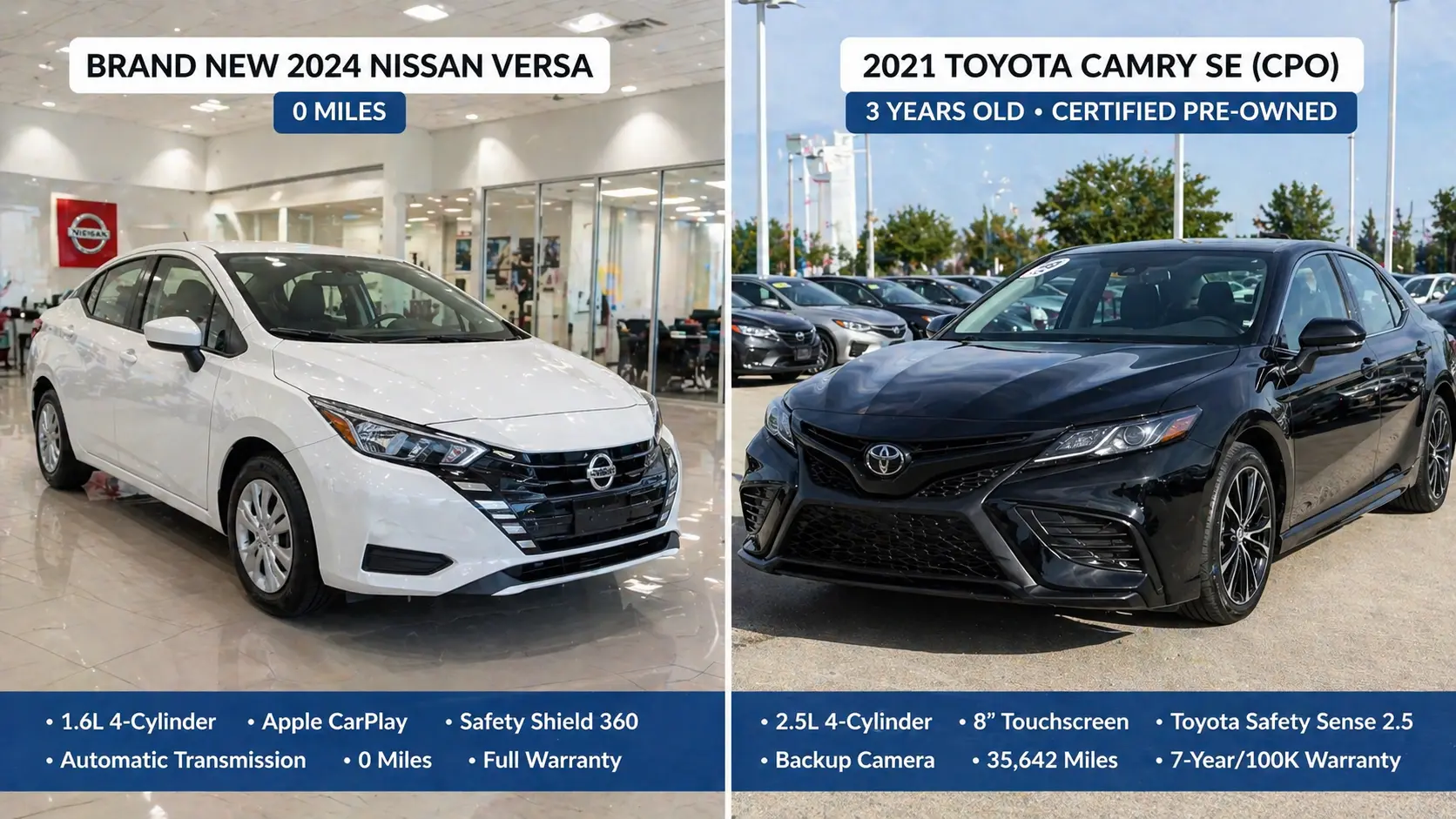
The Case for New: In 2026, a few “budget heroes” still exist under $20k. You get that “new car smell,” 0 miles on the odometer, and the peace of mind of a 3-to-5-year warranty. However, these cars are usually smaller and have basic interiors.
-
The Case for Used: For $20,000, you can get a 3-year-old Toyota Camry or a Honda CR-V. These cars offer more space, better safety tech, and a more “premium” feel. The downside? You are responsible for maintenance once the original warranty expires.
3. Top 12 Best Cars Under $20,000 in USA (2026 Picks)
#1. 2026 Nissan Versa (The New King)
The Nissan Versa remains one of the few cars you can still buy brand new in the USA for under $20,000 (including destination fees).
-
Pros: Full warranty, Apple CarPlay/Android Auto, excellent fuel economy.
-
Cons: Small engine, basic cabin materials.
-
Real Example: A 2026 Versa S with a manual or CVT transmission typically starts around $18,500.
#2. 2022-2023 Toyota Corolla (The Used Legend)
A slightly used Corolla is arguably the smartest way to spend $20,000.
-
Pros: Incredible reliability, high resale value.
-
Cons: Can be boring to drive.
-
Real Example: Look for a 2022 LE trim with under 40,000 miles.
#3. 2021-2022 Honda Civic (The Stylish All-Rounder)
The Civic offers a more modern interior and better handling than the Corolla.
-
Pros: Fun to drive, great safety ratings.
-
Cons: Used prices stay high because everyone wants one.
-
Real Example: A 2021 Honda Civic LX or Sport trim fits perfectly in this budget.
#4. 2020-2021 Mazda CX-5 (The Compact SUV)
Yes, you can get a premium SUV for under $20k. The CX-5 feels like a luxury car inside.
-
Pros: All-Wheel Drive (AWD) often included, beautiful interior.
-
Cons: Less cargo space than a RAV4.
-
#5. 2019-2021 Toyota RAV4 (The Reliable Adventurer)
The Toyota RAV4 is America’s favorite compact SUV for a reason. For $20,000, you can secure a 2019 or 2020 model that comes packed with modern design and Toyota Safety Sense technology. It offers incredible resale value and standard reliability that few competitors can match.
-
Pros: Huge cargo space, AWD availability, incredible resale value.
-
Cons: Higher mileage (usually 80k+) at this price point.
-
Real Example: A 2019 RAV4 LE with 85,000 miles is a solid $19,500 buy.

-
#6. 2021-2022 Kia Forte (The Feature-Packed Sedan)
The Kia Forte is the go-to choice for buyers who want the most modern features for the least amount of money. Within a $20,000 budget, you can often find relatively new models with low mileage.
-
Pros: Long manufacturer warranty (check if transferable), sleek infotainment tech, and highly competitive pricing.
-
Cons: Reliability ratings are good, but not quite as “bulletproof” as a Toyota long-term.
-
Real Example: A 2022 Kia Forte LXS with modern safety sensors often lists for around $17,500.
#7. 2018-2020 Honda Accord (The Executive Choice)
If you are looking for on-road “grace” and superior comfort, nothing beats the Honda Accord. This sedan is famous for its smooth handling and “glides like butter” on the highway, making it perfect for long American commutes.
-
Pros: Powerful turbocharged engine options, massive rear legroom, and a near-luxury interior feel.
-
Cons: Low ground clearance can be a challenge in heavy snow or on rougher roads.
-
#8. 2019-2021 Subaru Forester (Best for Cold Climates)
Living in the snow belt? Subaru’s Symmetrical All-Wheel Drive (AWD) is legendary and remains unmatched for handling icy or muddy roads. It is the perfect companion for those living in northern states.
-
Pros: Best-in-class outward visibility, standard AWD on all trims, and top-tier safety ratings.
-
Cons: The interior is built to be functional and durable but lacks a “fancy” or luxury feel.
-
-
#9. 2021-2023 Hyundai Elantra (The Modern Commuter)
The Hyundai Elantra’s sharp, aggressive design still looks incredibly futuristic in 2026. It is an excellent choice for commuters who want a car that stands out in the parking lot while saving money at the pump.
-
Pros: Stunning modern aesthetics, exceptional fuel economy, and a very user-friendly advanced infotainment system.
-
Cons: Some interior cabin materials and plastics can feel a bit cheap compared to more premium rivals.
#10. 2017-2019 Honda CR-V (The Practical Family SUV)
This vehicle is the gold standard for small families. Even as a used option, it remains a “certified” reliable choice for those who need a dependable daily driver that can handle school runs and road trips with ease.
-
Pros: Massive interior cargo space, plenty of rear legroom, and a very comfortable, smooth ride quality.
-
Cons: The infotainment system in these model years feels a bit dated compared to the high-tech screens of 2026.
-
#11. 2020-2022 Chevrolet Equinox
While many stick to Japanese brands, the Equinox is a solid American SUV that often sells for less than a RAV4 but offers similar space.
-
Pros: Quiet cabin, very easy-to-use infotainment, modern safety features.
-
Cons: Resale value isn’t as strong as Toyota.
#12. 2019-2021 Volkswagen Jetta
For those who want a European driving feel (solid steering and braking) on a budget.
-
Pros: Excellent fuel economy (up to 40 MPG on highways), premium interior feel.
-
Cons: Maintenance parts can be slightly more expensive than a Corolla.
-
4. Comparison Table: 2026 Top Picks Under $20,000
-
- Here’s a quick comparison to help you choose the best car under $20,000 based on your needs:
| Model | New/Used | Reliability Score | Best For | Est. MPG |
| Nissan Versa | New | 8.5/10 | Budget/Warranty | 35 |
| Toyota Corolla | Used | 9.8/10 | Daily Commute | 34 |
| Honda Civic | Used | 9.5/10 | Style & Drive | 33 |
| Mazda CX-5 | Used | 8.9/10 | Luxury Feel | 28 |
| Toyota RAV4 | Used | 9.3/10 | Families/Space | 30 |
| Kia Forte | Used | 8.0/10 | Tech Features | 32 |
| Honda Accord | Used | 9.4/10 | Comfort/Size | 30 |
| Subaru Forester | Used | 9.0/10 | All-Weather/Snow | 29 |
| Hyundai Elantra | Used | 8.7/10 | Modern Design | 33 |
| Honda CR-V | Used | 9.6/10 | Practicality | 30 |
| Chevy Equinox | Used | 7.9/10 | Value for Money | 28 |
| VW Jetta | Used | 8.2/10 | German Driving | 34 |
-
5. Pros & Cons: New vs. Used at $20,000
Buying New (e.g., Nissan Versa, Mitsubishi Mirage):
-
Pros: 0 miles, full bumper-to-bumper warranty, lower interest rates on loans.
-
Cons: Rapid depreciation (value drops fast), smaller vehicle size, fewer luxury features.
Buying Used (e.g., Toyota Camry, Honda CR-V):
-
Pros: Better build quality, more features, someone else already paid for the initial depreciation.
-
Cons: Higher interest rates, potential for hidden repairs, no/limited warranty.
-
6. Step-by-Step Buying Guide for 2026
Buying a car for $20,000 is a major financial decision. Follow this 2026 roadmap to ensure you don’t get stuck with a lemon:
-
Define Your Needs: Do you need AWD for snow? Or is fuel economy your only concern? Don’t buy an SUV if a sedan like the Toyota Corolla meets your needs—you’ll save thousands in fuel.
-
Secure Pre-Approval: Before stepping onto a dealership lot, get a loan pre-approval from a credit union. Dealership interest rates on $20,000 used cars can be 2-3% higher than bank rates.
-
The “VIN” Check: Use services like CARFAX or AutoCheck. In 2026, many cars look great on the outside but have “Title Brands” (Salvage or Flood damage) hidden in their history.
-
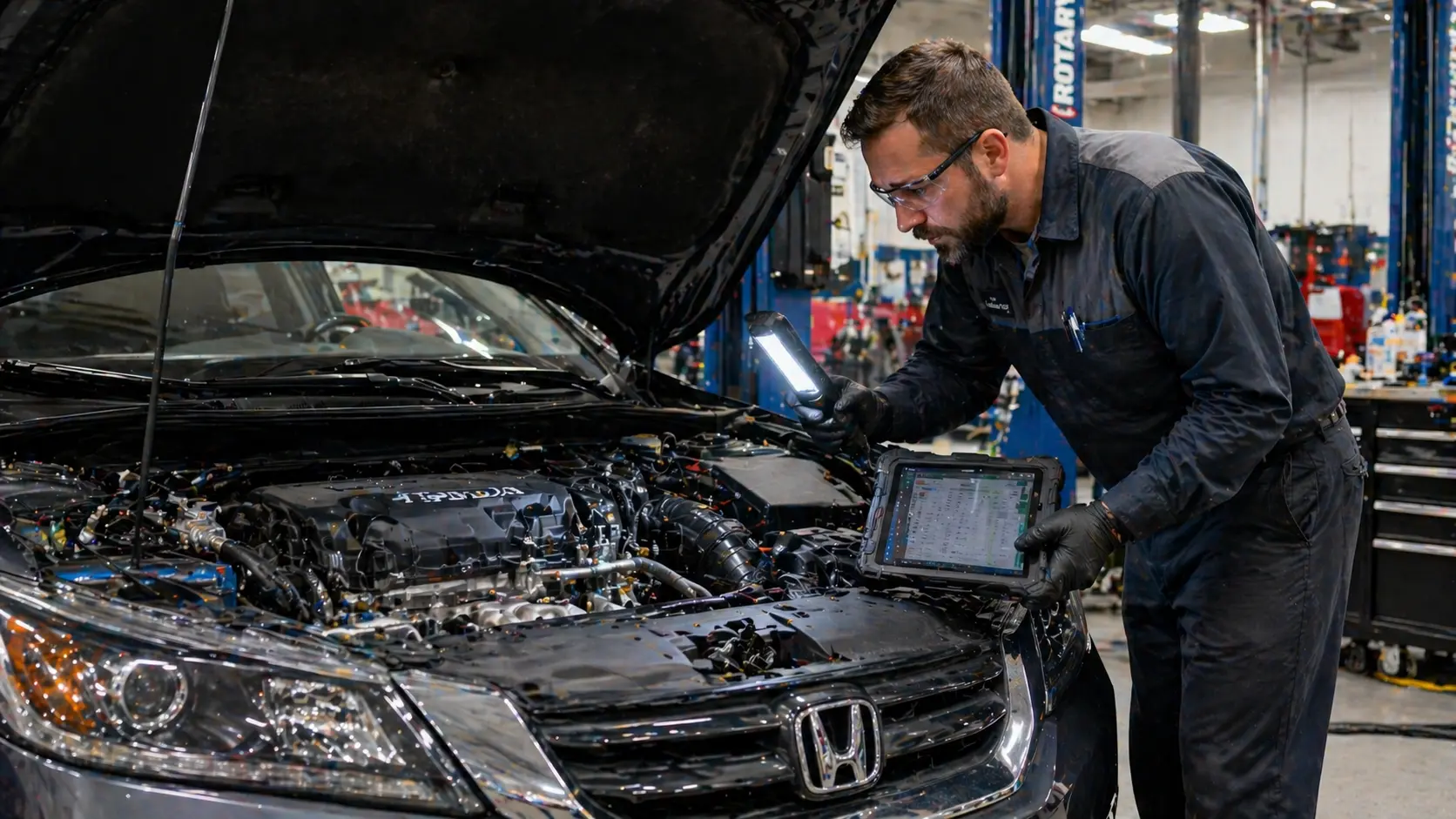
The PPI (Pre-Purchase Inspection): Never buy a used Honda or Toyota without a $150 professional inspection. A mechanic can spot a leaking head gasket or a failing transmission that you might miss during a 10-minute test drive.
-
Haggle on the “Out-the-Door” Price: Salesmen often talk about “Monthly Payments.” Ignore them. Focus on the total price including taxes and fees.
7. Detailed “Red Flags” to Watch Out For
-
The “Flood Car” Warning: In 2026, many cars from coastal areas have hidden water damage. Always check under the carpets for silt or a musty smell.
-
Odometer Fraud: Digital odometers can be tampered with. Cross-verify the mileage on the dashboard with the service records on CARFAX.
-
Mismatched Paint: If one door looks slightly brighter than the rest, the car was likely in an accident that wasn’t reported to insurance.
-
8. Maintenance & Longevity Tips
To make a $20,000 car last another 10 years, you must be disciplined.
-
Fluid Rotations: In 2026, modern engines are smaller and run hotter. Change your oil every 5,000 miles, even if the car says 10,000.
-
Transmission Care: If you buy a Nissan with a CVT or a Honda, ensure the transmission fluid is changed every 30,000 to 50,000 miles.
-
The “Detailing” Investment: UV rays in many parts of the USA can ruin a car’s paint and interior. A simple $50 ceramic coating or wax twice a year protects your resale value.
9. Financing Strategies (The 20/4/10 Rule)
If you are financing your $20,000 purchase, use the 20/4/10 Rule to stay financially healthy:
-
20% Down Payment: Pay $4,000 upfront. This keeps you from being “underweight” (owing more than the car is worth).
-
4-Year Term: Do not finance a used car for more than 48 months. Long-term loans (72-84 months) result in massive interest payments.
-
10% Monthly Income: Your total car expenses (Loan + Insurance + Gas) should never exceed 10% of your take-home pay.
If you have a challenging credit history, don’t worry. Check our guide on how to get a car loan with bad credit in the USA for specific advice on securing a fair rate.
-

-
Ready to buy but worried about financing? Read our expert guide on securing a car loan with bad credit in the USA. Also, don’t forget to factor in your monthly premiums by checking the cheapest car insurance for young drivers to keep your total costs under budget.
10. Frequently Asked Questions (FAQs)
Q: Can I find a 2026 model car for under $20,000? A: Yes, but your options are limited to subcompact cars like the Nissan Versa or Mitsubishi Mirage. For more features, a 2-3 year old used car is usually a better value.
Q: Is a $20,000 car better than a $15,000 car? A: Usually, yes. The extra $5,000 typically buys you 30,000 fewer miles on the odometer and significantly better safety technology like Automatic Emergency Braking.
Q: Should I buy a used Electric Vehicle (EV) for $20,000? A: In 2026, used EVs like the Chevy Bolt are available under $20k. However, ensure the battery warranty is still active, as out-of-pocket battery replacements are extremely expensive.
Q: What is the most reliable SUV for under $20k? A: The Toyota RAV4 (2018-2019) and the Mazda CX-5 (2019-2020) are the top contenders for reliability and overall value in this bracket.
11. Final Verdict
The $20,000 car market in 2026 offers incredible opportunities for those who do their homework. Whether you choose the safety of a new car warranty or the comfort of a used luxury sedan, prioritize History over Looks. A well-maintained Honda or Toyota will always be a better investment than a neglected luxury car.
Drive safe, stay informed, and always trust the data over the salesman’s pitch.
-