Introduction: Buying a Car in America Is More Complicated Than Most Students Expect
For many international students, buying a car in the USA sounds simple at first. You search online, find a used Toyota Corolla or Honda Civic, pay the seller, and start driving.
In reality, the process is much more complicated.
The vehicle itself is only one part of the decision. You also need to understand insurance, financing, title transfer, registration, taxes, inspections, hidden fees, and long-term ownership costs. For students who recently arrived in America, the entire process can feel overwhelming.
Many international students focus only on the purchase price. That is one of the biggest mistakes first-time buyers make.
A $12,000 car is not really a $12,000 car once you include:
- sales tax
- registration fees
- insurance
- fuel
- parking
- maintenance
- emergency repairs
- inspection costs
The wrong purchase can quietly drain thousands of dollars during college.
This guide explains how to buy a car in the USA as an international student in a practical and beginner-friendly way. The goal is not to provide legal or immigration advice. Rules vary by state, lender, dealership, and insurance company.
The goal is simple:
Help international students avoid expensive mistakes and make smarter car-buying decisions.
Can International Students Buy a Car in the USA?
Yes, international students can usually buy a car in the USA.
Being an F-1 student does not automatically stop you from purchasing a vehicle. The bigger challenge is usually understanding financing, insurance, DMV registration, and paperwork requirements.
International students commonly face issues such as:
- limited U.S. credit history
- no Social Security Number (SSN)
- expensive insurance rates
- confusion about title transfer
- unfamiliar DMV procedures
- fear of scams or hidden vehicle problems
In most cases, if you have proper identification, proof of address, and a valid way to insure the car, purchasing a vehicle is possible.
However, DMV rules vary by state. A student in Texas may face different registration requirements than a student in California, Florida, or New York.
Before buying any vehicle, international students should confirm four things:
- Can you legally drive in your state?
- Can you get auto insurance for the vehicle?
- Do you understand the title transfer process?
- If financing, does the lender accept your credit profile, SSN, ITIN, or co-signer?
Do not assume your friend’s experience in another state will be identical to yours.
International students should also review their local DMV requirements before purchasing a vehicle, since registration and licensing rules can vary significantly by state.
Documents International Students May Need to Buy a Car
The exact paperwork depends on whether you are buying from a dealership, private seller, or financing company.
Identity and Student Documents
International students may need:
- Passport
- Visa
- Form I-20
- I-94 record
- Student ID
- Proof of enrollment
Driving and Address Documents
You may also need:
- U.S. driver’s license
- State ID
- Foreign driver’s license
- International Driving Permit (if applicable)
- Lease agreement
- Utility bill
- Bank statement
- University housing document
Financial Documents
If financing is involved, lenders may request:
- proof of income
- bank statements
- SSN (if available)
- ITIN (if applicable)
- employment information
- co-signer documents
Vehicle and Insurance Documents
Before registering the vehicle, you may need:
- signed vehicle title
- bill of sale
- proof of insurance
- odometer disclosure
- inspection paperwork
Requirements vary by state and lender.
Do You Need an SSN to Buy a Car in the USA?

Not always.
Buying a car without an SSN may still be possible, especially if you are paying cash.
However, financing becomes more difficult without an SSN because most lenders use it to check U.S. credit history.
Buying With Cash Without SSN
If you are paying cash, the process is usually simpler.
A dealership or private seller may not require an SSN just to complete the sale. But insurance and registration verification may still become more complicated.
Cash buying can work well for international students because:
- no loan approval is required
- no monthly payments exist
- no credit check is needed
- less paperwork is involved
However, students should still avoid spending their entire savings on the vehicle itself.
Financing Without SSN
Financing a vehicle without an SSN is harder.
Some lenders may accept:
- ITIN
- co-signer support
- proof of income
- student documentation
But approval may still come with:
- higher interest rates
- larger down payments
- shorter loan terms
- stricter requirements
SSN and Financing Comparison
| Situation | Main Challenge | Best Strategy |
|---|---|---|
| Cash buyer without SSN | Insurance and registration verification | Confirm DMV and insurance rules before buying |
| Financing without SSN | No U.S. credit history | Search for ITIN-friendly lenders |
| Buyer with co-signer | Co-signer risk | Use only trusted financial support |
| Buyer with SSN and credit history | Higher rates due to age/credit length | Compare multiple lenders |
The important point is simple:
Buying a car without an SSN may be possible.
Financing without an SSN is usually the difficult part.
Financing a Car as an International Student
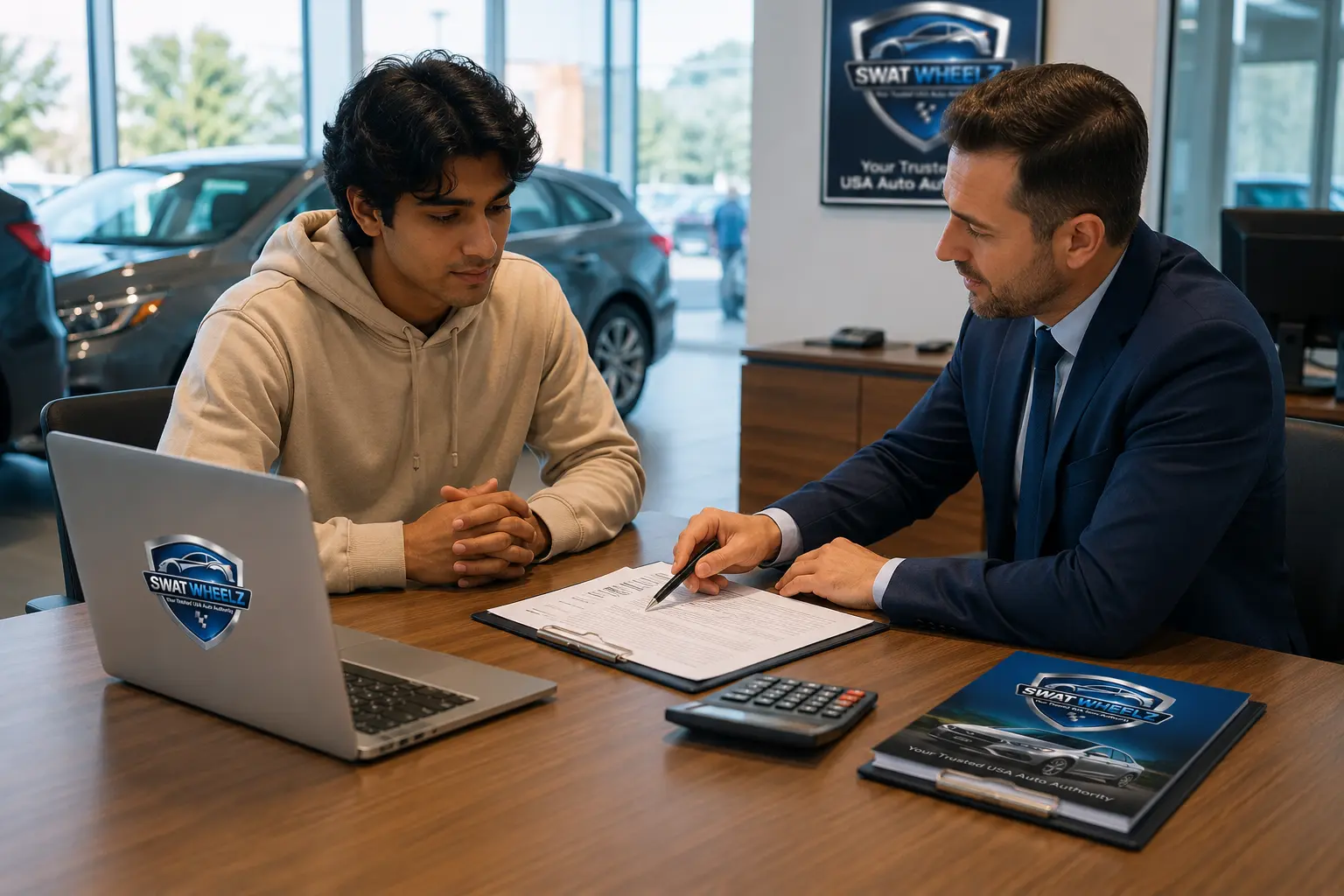
Financing is one of the biggest areas where international students make expensive mistakes.
A dealership may make the monthly payment sound affordable, but the real cost depends on:
- APR (interest rate)
- loan term
- insurance requirements
- total interest paid
- dealer add-ons
- down payment
Why Financing Is Difficult for International Students
International students often face financing problems because of:
- limited U.S. credit history
- no SSN
- short credit file
- limited income history
- visa duration concerns
- no long-term employment history
Lenders want confidence that borrowers can repay the loan.
Financing Options for International Students
Credit Unions
Credit unions may be more flexible than large banks.
Some university-area credit unions understand international student situations better and may offer easier approval requirements.
Dealership Financing
Dealership financing is convenient because the dealer handles the process.
But convenience does not always mean the best deal.
Always compare dealership offers with banks or credit unions before signing.
Co-Signer
A co-signer with strong U.S. credit can improve approval chances and lower interest rates.
However, the co-signer becomes financially responsible if payments are missed.
The APR Warning Students Must Understand
A low monthly payment does not always mean a good deal.
Dealers can reduce the payment by extending the loan term to 72 or 84 months, making the total cost far more expensive.
Before signing any loan, ask:
- What is the APR?
- What is the total interest paid?
- Is there a prepayment penalty?
- Are dealer add-ons included?
- Is GAP insurance optional or required?
Do not judge a loan only by the monthly payment.
Down Payment Strategy
A larger down payment can help international students by:
- lowering monthly payments
- reducing lender risk
- improving approval chances
- lowering total interest cost
For many students, financing only makes sense if the monthly payment comfortably fits the budget.
Cash vs Financing: Which Is Better?
There is no perfect answer for every student.
But for many international students, buying a reliable used car with cash or a large down payment is often safer than taking a high-interest loan.
Buying With Cash
Pros
- no monthly payment
- no interest charges
- easier without credit history
- simpler process
Cons
- uses savings quickly
- older cars may need repairs
- no warranty in many cases
Financing a Car
Pros
- preserves savings
- may help build credit
- allows newer vehicle options
Cons
- higher total cost
- approval difficulties
- expensive insurance requirements
- monthly financial pressure
Practical Recommendation
International students should avoid stretching themselves financially.
A clean-title used Corolla, Civic, Elantra, Prius, or Mazda3 with inspection history is usually a smarter student purchase than an old luxury vehicle with expensive repairs.
Dealership vs Private Seller
One of the first major decisions students face is whether to buy from a dealership or a private seller.
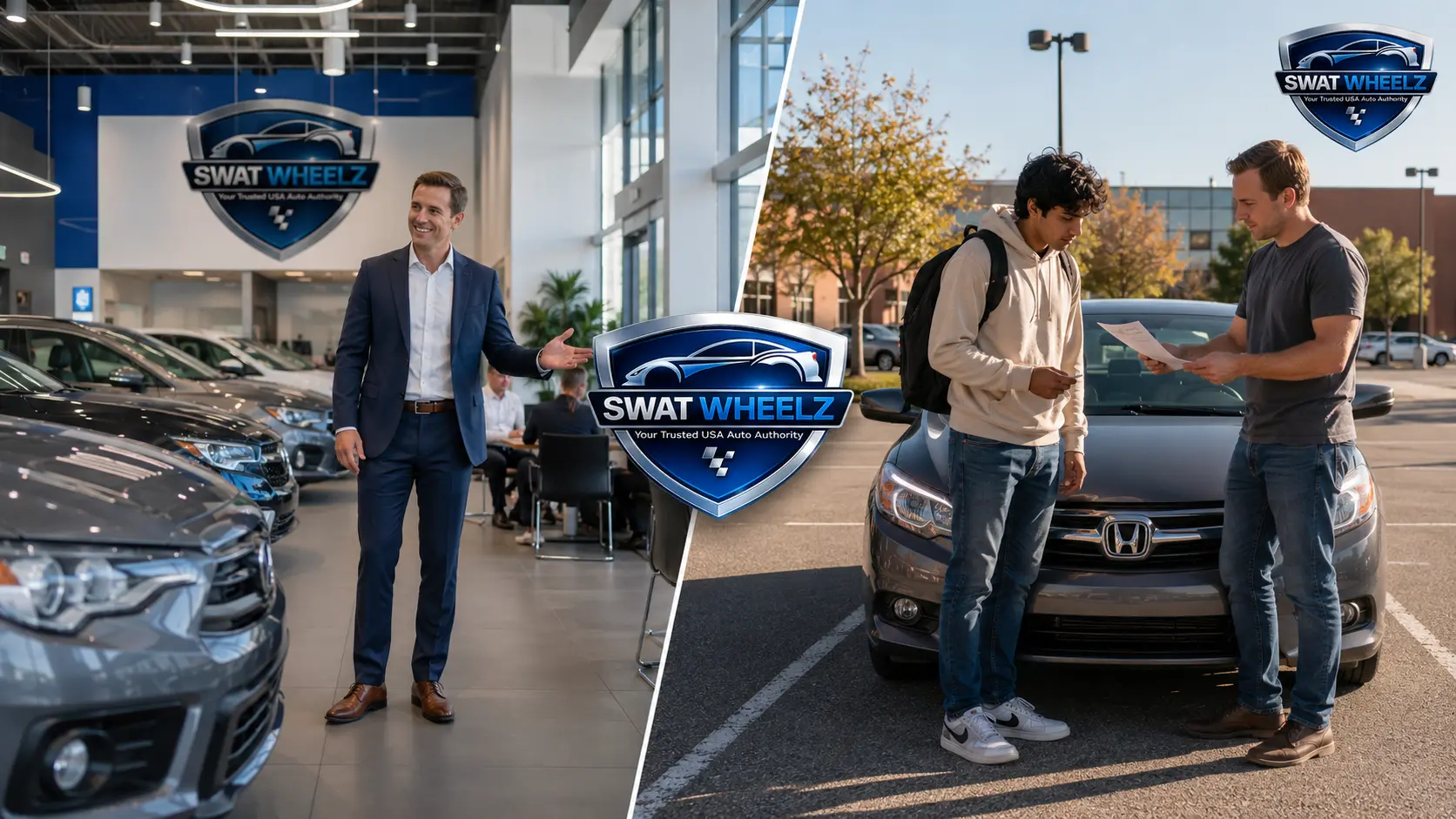
Buying From a Dealership
A dealership is often easier for beginners because it may help with:
- registration paperwork
- temporary plates
- taxes
- financing
- title transfer
However, dealerships are usually more expensive.
The listed price is often not the final price.
Always ask for the:
“Out-the-door price.”
This includes:
- vehicle price
- taxes
- registration fees
- documentation fee
- dealer charges
- add-ons
Buying From a Private Seller
Private sellers usually offer lower prices.
But private sales require more caution.
Students must verify:
- clean title
- VIN match
- seller identity
- service records
- no active loan/lien
- vehicle condition
A private sale without inspection can become extremely expensive later.
Comparison Table
| Buying Option | Pros | Cons |
|---|---|---|
| Dealership | Easier paperwork, financing options | Higher prices and fees |
| Private Seller | Lower prices | More risk and paperwork responsibility |
| Certified Pre-Owned Dealer | Warranty and inspections | More expensive |
| Buy Here Pay Here Dealer | Easier approval | Very high interest rates |
Dealer Fees International Students Should Watch For
International students are often targeted with unnecessary dealership add-ons.
Common Fees and Add-Ons
- documentation fees
- VIN etching
- paint protection
- extended warranties
- nitrogen tires
- market adjustment fees
- GAP insurance
Some fees are legitimate.
Others are optional or overpriced.
Before signing anything, ask for a printed buyer’s order showing every fee clearly.
Never negotiate only the monthly payment.
Best Cars for International Students in USA
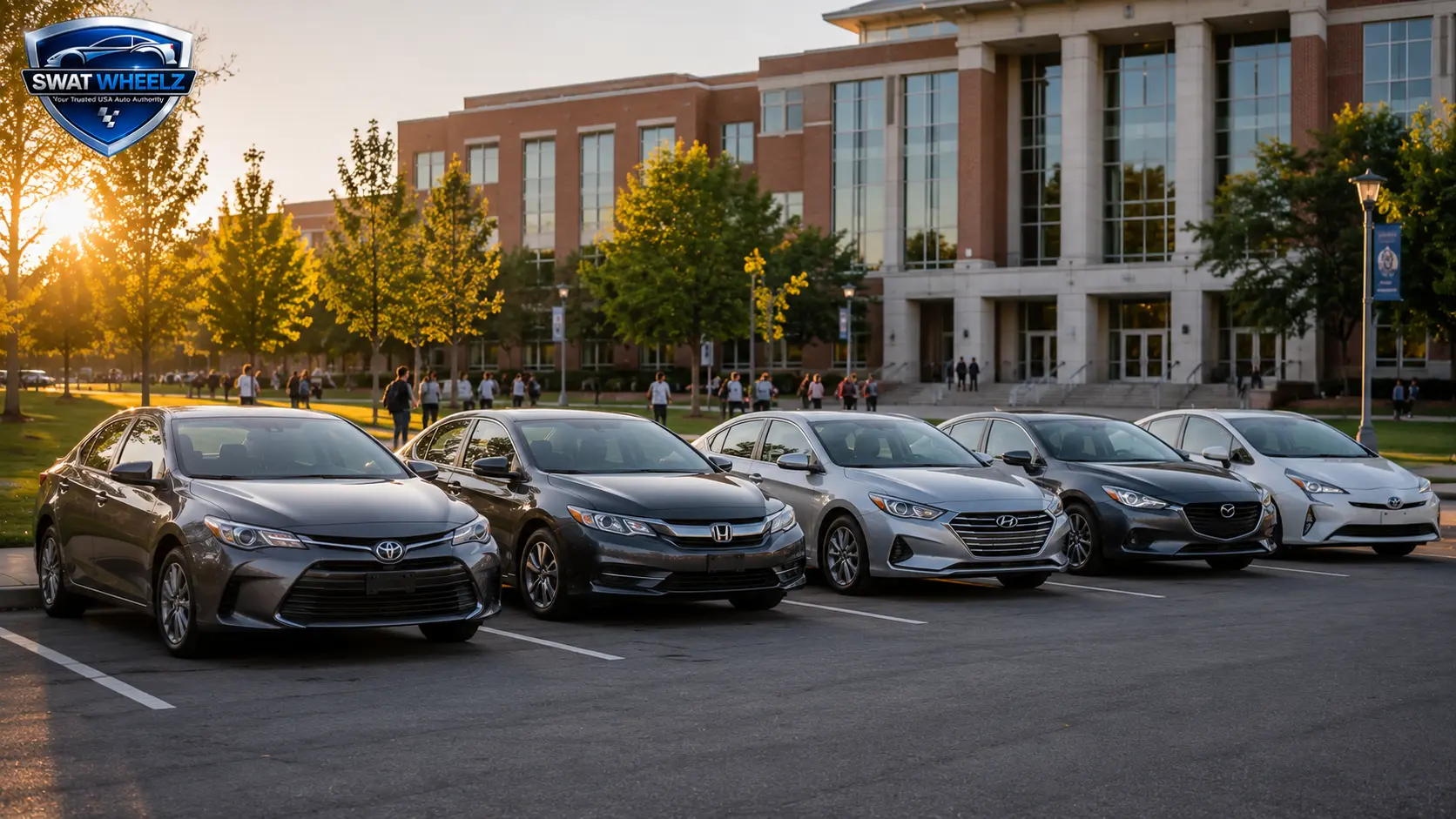
The best student car is not the flashiest vehicle.
It is the vehicle that keeps ownership costs low and life simple.
Toyota Corolla
The Corolla is one of the safest choices for international students because of its reliability, fuel economy, low maintenance costs, and strong resale value.
Honda Civic
The Civic offers a slightly sportier feel while still remaining practical, fuel-efficient, and reliable.
Hyundai Elantra
The Elantra is often cheaper than similar Toyota or Honda models while still offering good fuel economy and modern features.
Toyota Prius
The Prius works well for students who drive long distances and want maximum fuel savings.
Mazda3
The Mazda3 offers a more premium driving experience without luxury-brand repair costs.
Honda CR-V
The CR-V is practical for students needing extra cargo space or winter driving confidence.
Subaru Crosstrek
The Crosstrek is useful in snowy states because of its standard all-wheel drive.
Kia Forte
The Forte is a budget-friendly compact sedan with strong value for cost-conscious students.
Students interested in more affordable student vehicles should also explore our guide on the best first cars for college students in USA.
Used Car Inspection Checklist
Before buying any used vehicle, students should also check the car’s estimated market value and ownership costs using trusted automotive pricing resources.Kelley Blue Book
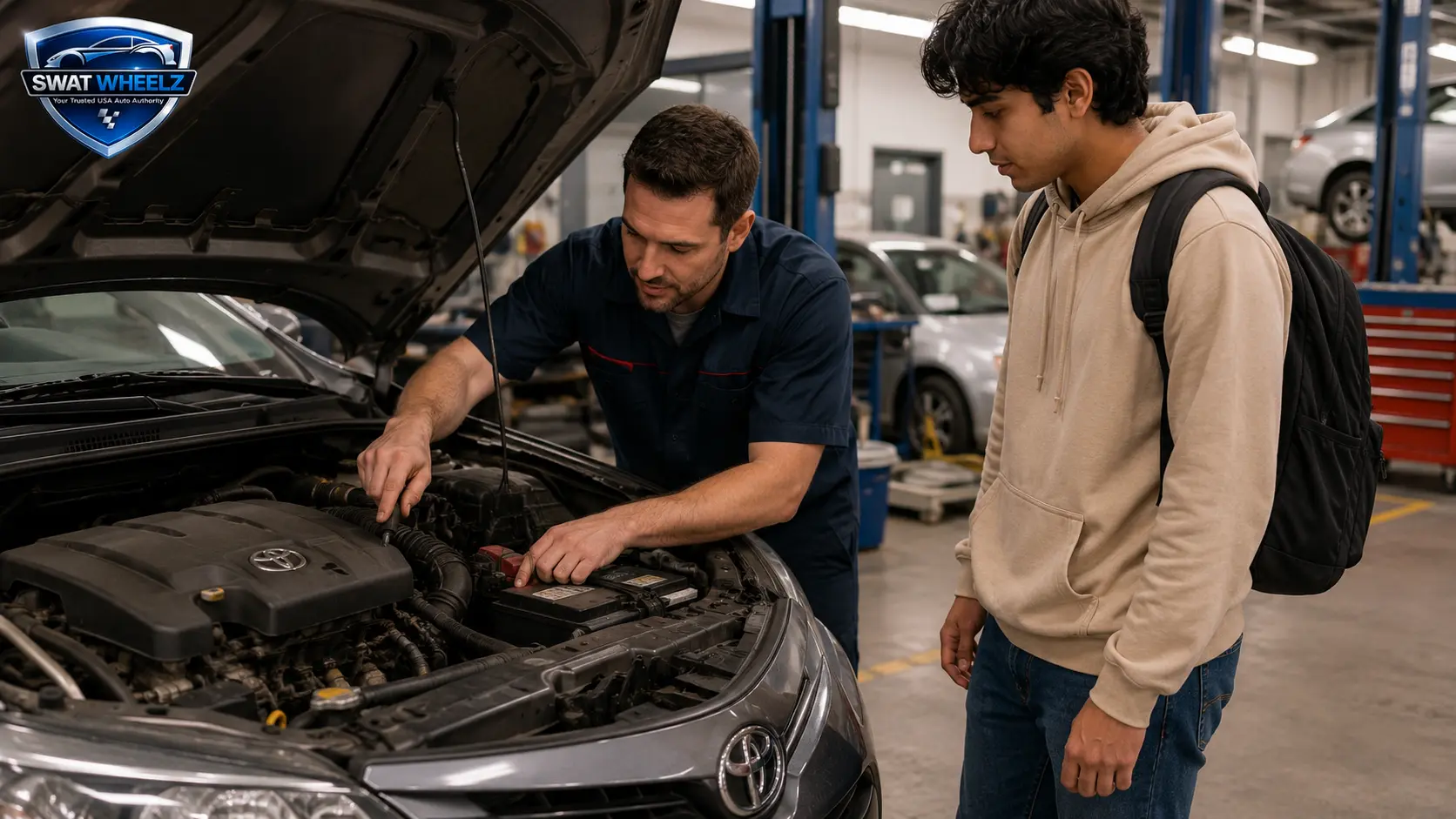
A used car inspection is one of the most important parts of the buying process.
Spending $100–$200 on a pre-purchase inspection can save thousands later.
Exterior Inspection
Check for:
- paint mismatch
- rust
- uneven panel gaps
- windshield cracks
- tire wear
- light damage
Interior Inspection
Test:
- AC and heater
- dashboard warning lights
- infotainment system
- windows and locks
- charging ports
- unusual smells or water damage
Mechanical Inspection
During the test drive, pay attention to:
- transmission shifting
- brake feel
- engine noise
- steering vibration
- smoke from exhaust
- warning lights
Document Inspection
Verify:
- clean title
- VIN match
- seller identity
- service records
- no active lien
- realistic odometer reading
Avoid salvage-title vehicles unless you fully understand the risks.
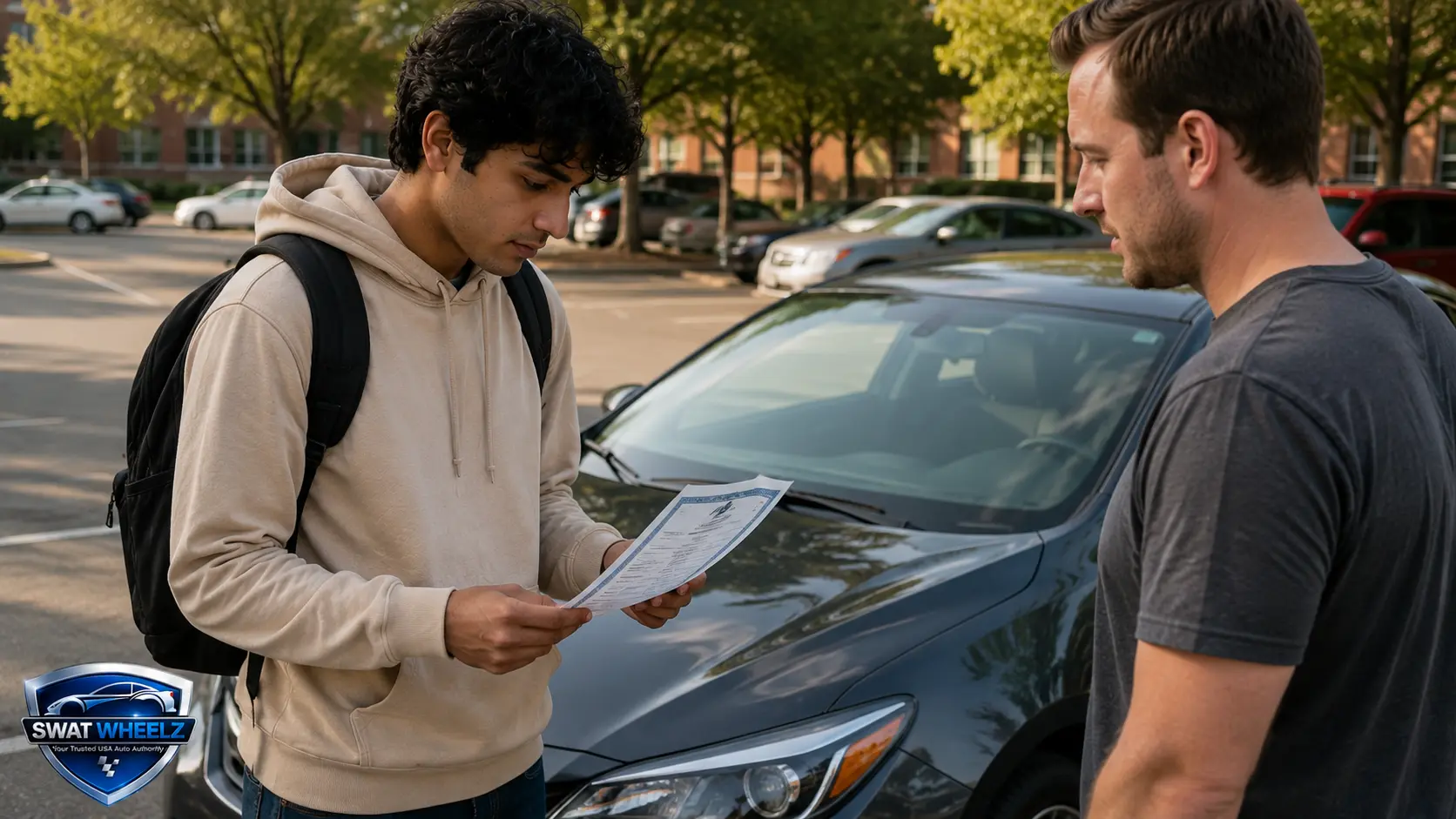
How to Avoid Used Car Scams
International students are sometimes targeted because scammers assume they do not understand the U.S. buying process.
Common Scams to Avoid
Fake Listings
If a car is priced far below market value, be suspicious.
Title Jumping
Do not buy a vehicle if the seller’s name does not match the title.
Flood-Damaged Vehicles
Watch for:
- musty smells
- electrical issues
- rust under seats
- water stains
Odometer Rollback
Compare mileage with:
- service records
- tire wear
- interior condition
- vehicle history reports
Pressure Tactics
Never rush because a seller claims:
“Many buyers are interested.”
A legitimate seller should allow inspections and document verification.
Car Insurance for International Students

Insurance is one of the largest hidden costs for international students.
A cheap car can still become expensive if insurance premiums are high.
Why Insurance Is Expensive
Insurance companies calculate risk using factors like:
- age
- driving history
- ZIP code
- credit history
- vehicle type
- prior insurance history
International students often have limited U.S. driving records, which increases perceived risk.
Liability vs Full Coverage
Liability insurance covers damage you cause to others.
Full coverage usually includes:
- liability coverage
- collision coverage
- comprehensive coverage
If the vehicle is financed, lenders usually require full coverage.
Uninsured Motorist Coverage
This coverage helps if another driver causes an accident without enough insurance.
How Students Can Lower Insurance Costs
Students may reduce insurance costs by:
- comparing multiple quotes
- choosing insurance-friendly vehicles
- avoiding sports cars
- using telematics programs
- asking about student discounts
- considering higher deductibles carefully
For more insurance-saving strategies, explore our guide on how to lower car insurance for young drivers in USA.
Registration, Title, and DMV Basics
After buying the vehicle, students must legally register it before driving regularly.
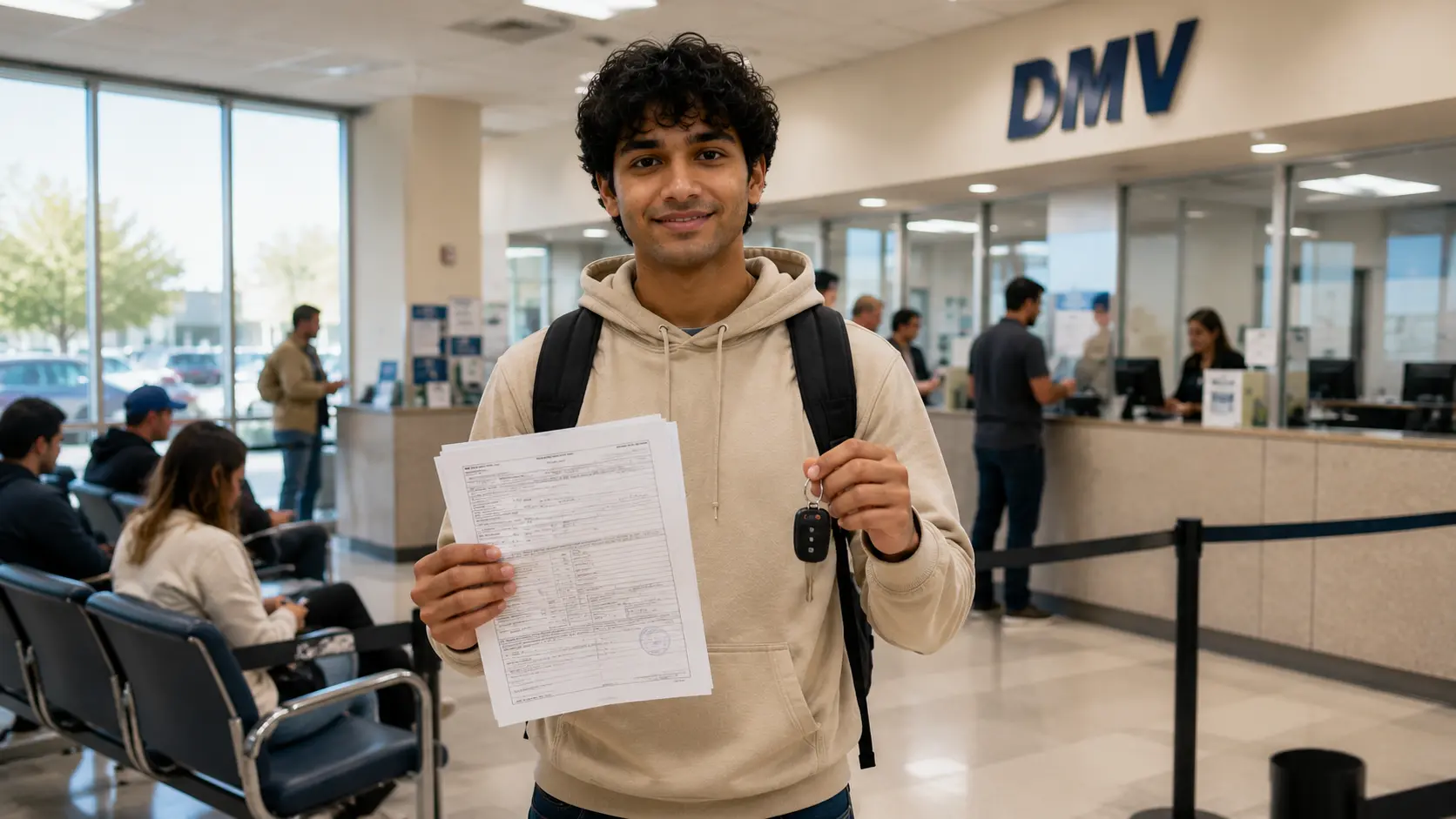
What Is a Title?
The title proves ownership of the vehicle.
What Is Registration?
Registration allows the vehicle to legally operate on public roads.
What You May Need for Registration
Depending on the state, students may need:
- signed title
- bill of sale
- proof of insurance
- driver’s license
- proof of address
- inspection paperwork
- registration fees
Can You Register a Car Without a U.S. Driver’s License?
This depends on the state.
Some states may allow registration with alternative identification, but insurance and registration are usually easier with a U.S. driver’s license.
Always check your local DMV requirements before purchasing.
Realistic Cost Breakdown
Many students underestimate the real cost of vehicle ownership.
Example: Used Toyota Corolla for $12,000
| Cost Category | Estimated Cost |
|---|---|
| Vehicle price | $12,000 |
| Sales tax | $600–$1,000 |
| Title and registration | $150–$400 |
| Insurance | $150–$300 |
| Inspection | $100–$200 |
| Immediate maintenance | $100–$500 |
| Emergency reserve | $500–$1,000 |
The actual cost of buying a car is much higher than the sticker price alone.
Monthly Budget Example
Student A: Old Luxury Car
| Monthly Cost | Estimated Amount |
|---|---|
| Insurance | $240 |
| Fuel | $170 |
| Maintenance reserve | $150–$300 |
| Parking | $50 |
Student B: Reliable Corolla or Civic
| Monthly Cost | Estimated Amount |
|---|---|
| Insurance | $160 |
| Fuel | $90 |
| Maintenance reserve | $50–$100 |
| Parking | $50 |
The yearly difference can easily exceed several thousand dollars.
Common Mistakes International Students Make
Buying the Cheapest Car Without Inspection
A cheap car can quickly become expensive if major repairs are needed.
Ignoring Insurance Costs
Always check insurance quotes before buying the vehicle.
Trusting Sellers Too Quickly
Never rely only on seller descriptions or photos.
Not Checking the Title
No clean title means no safe purchase.
Taking a High-APR Loan
A low monthly payment does not mean the loan is affordable long-term.
Buying Luxury Cars Too Early
Old BMWs, Audis, Mercedes-Benz models, and Range Rovers can become financial traps for students.
Skipping the Test Drive
A test drive can reveal problems with brakes, steering, suspension, and transmission.
Step-by-Step Guide: How to Buy a Car in the USA as an International Student
Step 1: Decide Your Real Budget
Include taxes, insurance, inspection, maintenance, and emergency savings.
Step 2: Check State Requirements
Verify driver’s license, insurance, and DMV requirements.
Step 3: Choose Cash or Financing
If financing, get pre-approved before visiting dealerships.
Step 4: Get Insurance Quotes Before Buying
Insurance costs vary heavily depending on the vehicle.
Step 5: Search for Reliable Cars
Focus on reliable, fuel-efficient vehicles with low ownership costs.
Step 6: Check Vehicle History
Review accident history, title status, and maintenance records.
Step 7: Inspect and Test Drive
Always inspect the vehicle carefully and test drive it.
Step 8: Get a Mechanic Inspection
Use an independent mechanic before purchasing.
Step 9: Negotiate the Price
Use inspection findings to negotiate fairly.
Step 10: Complete Registration and Title Transfer
Get insurance, complete DMV paperwork, and register the vehicle legally.
FAQs
Can international students buy a car in the USA?
Yes, international students can usually buy a car in the USA, although financing, insurance, and registration requirements may vary by state and lender.
Can I buy a car without an SSN?
Yes, especially with cash purchases. Financing without an SSN is usually more difficult.
Can I finance a car as an international student?
Yes, but approval often depends on credit history, down payment, income, SSN or ITIN, and co-signer support.
Is it better to buy from a dealer or private seller?
Dealerships are usually easier for beginners, while private sellers may offer lower prices but higher risk.
What is the best car for international students?
Reliable, fuel-efficient vehicles such as the Toyota Corolla, Honda Civic, Hyundai Elantra, Prius, and Mazda3 are usually smart choices.
Why is insurance expensive for international students?
Insurance companies often view international students as higher risk because of limited U.S. driving and credit history.
Should students buy used or new cars?
For most international students, a reliable used car provides better financial value than a new vehicle.
What should I check before buying a used car?
Check the title, VIN, service records, accident history, tire condition, brakes, warning lights, and overall mechanical condition.
Is a salvage-title car worth buying?
Usually not. Salvage vehicles may be difficult to insure, finance, register, and resell.
What is the biggest mistake international students make?
Focusing only on purchase price instead of total ownership cost.
Conclusion: Focus on Reliability, Not Flashiness
Buying a car in the USA as an international student can feel complicated at first, but the process becomes much easier when you understand the basics.
The smartest student vehicle is usually not the newest or flashiest option.
A reliable, fuel-efficient, insurance-friendly car with a clean title and inspection history is often the safest financial decision.
Before buying any vehicle:
- check insurance quotes
- inspect the title carefully
- understand loan terms
- review DMV requirements
- budget for taxes and repairs
- pay for a mechanic inspection
For most international students, practical vehicles like the Toyota Corolla, Honda Civic, Hyundai Elantra, Prius, or Mazda3 provide the best balance of affordability, reliability, and long-term ownership value.
At SwatWheelz, we recommend international students focus on reliability, insurance costs, and total ownership expenses before buying their first car in the USA.
About the Author
Written by: Shaukat Ali
Content Strategist and Automotive Research Lead at SwatWheelz.
Shaukat Ali creates practical automotive guides focused on vehicle ownership costs, insurance, financing decisions, and smart buying strategies for U.S. drivers.
Editorial Process
This SwatWheelz guide was developed through practical research into U.S. vehicle ownership, DMV-related processes, insurance considerations, financing challenges, and common issues faced by international students.
This article is for educational purposes only and should not be considered legal, immigration, or financial advice. Rules and requirements may vary by state, lender, dealership, and insurance provider.
Last Updated: May 2026